Partnerships That Advance Performance
*
Partnerships That Advance Performance *
We align technical insight with disciplined execution to provide measurable gains across operational, financial, and strategic domains.
Is Postpartum Our Most Preventable Cause of Morbidity and Mortality?
Submission to the Australian Senate Select Committee on Women's Health
1. Executive Summary & Lived Reality
For clinicians working across the continuum of Women’s Health; from preconception through extended postpartum and perimenopause, a deeply concerning picture emerges: postpartum functions as a quiet erosion. A mother’s physiological equilibrium, sense of identity, and surrounding support networks frequently slip away in plain sight, leaving her depleted within an isolating invisible burden that at its worst costing lives. When seeking assistance, she must navigate an exhausting labyrinth of fragmented systems and closed doors, left to weather a severe physiological, economical and socio-emotional storm while systemic frameworks fail to offer protection or adequate directions. This represents a slow-burning public health crisis born of systemic neglect, where healthcare structures have normalised allowing mothers to sink silently into long-term morbidity.
Panel Perspectives
Naomi Jansson - Holistic Women's Health Clinical Nurse: "Postpartum has a hidden morbidity and mortality when we compare it to the visibility of pregnancy and birth issues."
Dr Oscar Serrallach - Integrative GP: "Postpartum depletion and the biological demands of maternal recovery require a re-evaluation of our healthcare timelines, recognising that metabolic and endocrine normalisation takes up to a year or longer."
1.3 The First Line: Frontline Clinical Perspectives
Frontline clinicians in maternal and perinatal services occupy a unique vantage point: witnessing firsthand the profound, uncosted burden of unaddressed maternal injury, physical and emotional trauma, and psychological sequelae, while simultaneously recognising how easily such harm can be mitigated through proactive, preventative interventions and infrastructure. Proactive identification of biological vulnerabilities and coordinated multidisciplinary scaffolding prevent downstream tertiary hospital presentations and chronic disease trajectories.
Panel Perspectives
Naomi Jansson - Holistic Women's Health Clinical Nurse: "Frontline maternal services are uniquely positioned to recognise how early, preventative intervention reduces long-term physical and emotional sequelae."
Dr Oscar Serrallach - Integrative GP: "Proactive biological assessment in primary care prevents downstream tertiary presentations by addressing physiological vulnerabilities before they turn into chronic pathology."
1.3 Core Recommendations & High-Impact Policy Outcomes
To address the profound structural shortcomings of the current postpartum healthcare landscape, we submit six key actionable, high-priority recommendations for systemic reform:
Longitudinal Postpartum Care Timeline: Formally redefine the clinical postpartum period to span a minimum of 12 months, discarding the obsolete 6-week physical and 6-month mental health discharge paradigms to align with emerging & evidenced based international research on physiological biology of postpartum.
Funded Physiological Screening Checkpoint: Establish a dedicated, MBS-funded maternal physiological health check within the first 12 months post-birth (between 6-12 months), explicitly targeting thyroid status, iron panel metrics and pelvic floor stability.
Multidimensional Standardised Assessment Tool: Develop and deploy a national validated screening tool (e.g. similar to Edinburgh Postnatal Depression Scale-EPDS) to routinely evaluate systemic physiological, psychological, socio-emotional and economic determinants of recovery.
Targeted Health Vouchers: Introduce ring-fenced financial subsidies or vouchers (e.g., $500 per mother, similar to NDIS or Chronic Disease Management frameworks with postpartum status as eligibility criteria) to eliminate cost barriers for essential non-acute primary or allied health services, including specialised clinical nutritionists, lactation consultants, pelvic floor physiotherapists, and in-home support services.
Perinatal Care Coordination Network: Fund dedicated perinatal care coordinators within primary health networks to actively bridge the communication and referral gap between acute tertiary maternity hospitals and community-based primary providers.
Preventative Trajectory Mapping: Publish a national clinical time map and educational guidance for clinicians and mothers, normalising the multi-stage 12-month biological recovery trajectory and identifying key clinical milestones.
Panel Perspectives
Dr Oscar Serrallach - Integrative GP: "To think that postpartum for physical issues ends at six weeks and for mental health ends at 6 months is not based on current biological research or understanding."
Jessica Hoskins - Clinical Nutritionist: "Just even in the assessment, having structured questions around... fatigue and pain... but also meal access, nutritional access."
Naomi Jansson - Holistic Women's Health Clinical Nurse: "The fragmentation between acute hospital discharge and community primary care leaves mothers without clear referral pathways, resulting in avoidable emergency presentations."
Naomi Jansson - Holistic Women's Health Clinical Nurse: "Long-term improvement demands dedicated resourcing, equitable primary care access, and cross-disciplinary education across all healthcare sectors."
Melissa Hays - Registered Midwife and Lactation Consultant (IBCLC): "Unaddressed feeding and sleep challenges lead to preventable physical and mental morbidity, requiring dedicated funding and recognition of specialised perinatal care."
Melissa Hays - Registered Midwife and Lactation Consultant (IBCLC): "Fragmented care pathways leave mothers receiving conflicting advice on infant feeding and care, compounding distress and increasing the cost of disjointed support."
Ms Emily Hodges - Perinatal Psychiatric Nurse Practitioner: "Medicare-funded pathology tests in preconception and postpartum to cover TFT, Fe Studies, and more. We need to look at mother's overall health and address all underlying causes possibly contributing to mental health decline."
Ms Emily Hodges - Perinatal Psychiatric Nurse Practitioner: "I've recommended additional Medicare-funded psychology sessions during pregnancy and for at least 12 months postpartum where clinically required."
Ms Emily Hodges - Perinatal Psychiatric Nurse Practitioner: "Acknowledgement, and widespread awareness of the structural brain changes and identity shift of motherhood."
Jenny Blyth - Birth Educator & Advocate: "When mothers are surrounded with structured, foundational care, health restoration follows naturally, protecting families for generations."
1.4 Identified Systemic Vulnerabilities & Structural Gaps
Our interdisciplinary clinical analysis highlights four critical systemic failures currently compounding postpartum morbidity across Australia:
Tertiary-to-Community Disconnect: A pronounced communication breakdown persists between acute health services and primary care. General Practitioners routinely lack visibility or awareness of local, community-embedded continuity-of-care programmes and allied health networks.
Postgraduate Training & Educational Deficits: Current professional education frameworks lack structured undergraduate or postgraduate training, such as a formal postgraduate certificate, to establish standardised perinatal competencies across primary care, allied health and complementary healthcare disciplines, allowing complex physiological morbidity to remain unrecognised and untreated.
Institutional Misogyny & Pain Dismissal: The pervasive clinical normalisation of maternal suffering leads to the dismissal of severe post-birth pain and pathology as expected baseline experiences, driving preventable, late-stage emergency escalations or chronic and prolonged morbidity. An entire restructuring of women's health services & education would contribute significantly to a more cost-effective model of care, recognising that complex clinical interventions are rarely the most efficient or effective solutions for optimal maternal health outcomes.
National Longitudinal Data Deficits: Australia lacks comprehensive, centralised registry data tracking postpartum attendance rates, long-term impacts of pelvic floor trauma, psychological distress, relationship breakdown and divorce and the cumulative burden of chronic maternal exhaustion and biological depletion. Furthermore, there is a critical absence of nationwide tracking for the prevalence of untreated postpartum depression and anxiety, rates of unrecognised birth trauma, compounding physiological impacts of chronic sleep deprivation, long-term career disruption and economic loss for mothers, frequency of emergency department presentations for preventable postpartum complications, and the far-reaching generational impacts of untreated maternal depletion.
2. Systemic Burden & Economic Impact
Postpartum pathologies are frequently the sequelae of unrecognised physiological strain, generating a profound individual, generational, and societal burden. The financial toll imposed on individuals and public health infrastructure is immense, yet key contributors are preventable. Effective management and integration of non-clinical, community-embedded resources directly reduces the downstream tertiary clinical care required by millions of dollars annually.
Panel Perspectives
Jess Nguyen - Community Pharmacist: "Integrating non-clinical community resources and primary care access delivers immense cost savings to public health infrastructure while relieving hospital pressure."
Jenny Blyth - Birth Educator & Advocate: "When community-embedded support is missing, the economic and personal burden of unaddressed maternal exhaustion compounds exponentially."
Ms Emily Hodges - Perinatal Psychiatric Nurse Practitioner: "We need more accessible, holistic mother and baby units and/or outreach services for support in the home and for the mother, and her family, this could include postpartum doulas."
Ms Emily Hodges - Perinatal Psychiatric Nurse Practitioner: "Mental health care should continue through preconception, to the whole first postpartum year: mental health follow-up for at least 12 months postpartum, with continuity between maternity services, GPs, maternal and child health, lactation consultants, pelvic floor Physios, and specialist perinatal teams including specialists & maternal health experts."
2.1 Central Premise of Submission
Preventative Mitigation: Simple, targeted structural interventions save lives and dramatically shift economic and clinical burdens away from acute Australian public hospital systems.
Systemic Scaffolding Gap: Postpartum and women's health as a continuum lack the adequate multidisciplinary scaffolding necessary to mitigate systemic biological and social risks inherent to childbearing.
Panel Perspectives
Dr Oscar Serrallach - Integrative GP: "Preventative structural interventions save lives by directly shifting acute clinical burdens away from public hospital systems by preventing them."
Jessica Hoskins - Clinical Nutritionist: "Without multidisciplinary scaffolding, women face systemic biological and social risks that simple, targeted care could easily mitigate."
Ms Emily Hodges - Perinatal Psychiatric Nurse Practitioner: "Paid parental leave is also health policy. I've recommended a longer, separately reserved entitlement for each parent, four weeks is too short a time in which to establish shared care."
Melissa Hays - Registered Midwife and Lactation Consultant (IBCLC): "Infant feeding, maternal sleep, and postpartum recovery are deeply interconnected; addressing them through a unified multidisciplinary approach is vital for restoring family health."
Ms Emily Hodges - Perinatal Psychiatric Nurse Practitioner: "Improve the issue of isolation, with local community support groups to help with connection and loneliness. We need to look at the social and cultural conditions of motherhood."
Ms Emily Hodges - Perinatal Psychiatric Nurse Practitioner: "Accessibility to family therapy and preconception couples counselling, to prepare for the practical changes to family and roles."
2.2 Key Action List & Structural Scaffolding Framework
2.2.1 Immediate Scaffolding & Actionable Interventions
Funded 6-Month Postpartum Checkpoint: Establish an MBS-funded clinical check-in at 6 months postpartum, focusing on physiological, endocrine, pelvic floor, and psycho-emotional health.
National Outcomes & Prevalence Registry: Implement systematic tracking of postpartum health outcomes, attendance rates, chronic pain prevalence, and recovery trajectories across all Australian states and territories.
Peer Community Health Hubs: Fund and establish community-embedded peer centres that provide integrated clinical referrals and services with social and cultural resources, serving as accessible, non-clinician-led sanctuaries.
Public Sector Representation & Advocacy: Guarantee dedicated representation for Women's Health, Pregnancy, and Postpartum Wellbeing across public health leadership and policy development bodies.
Public Health Education Campaign: Reframe perinatal care as a national public health priority, delivered through public health literacy programmes and workplace education to dismantle cultural taboos surrounding maternal recovery and the invisible load.
Default Standardised Clinical Questionnaire: Embed default screening questions into all primary care women's health presentations, systematically evaluating pain, physical function, emotional health, domestic safety and systemic impacts on daily living.
Mandatory Extended Consultations: Institute funded, extended consultation models for women's health appointments to allow for comprehensive physical, psycho-emotional and safety evaluations without clinical time pressures.
2.2.2 Systemic Inequality & Interdisciplinary Integration
Addressing Systemic Burden & Burnout: Mitigate the compounding burden borne by individual women and families, as well as the severe burnout experienced by frontline healthcare providers, by filling critical system gaps through better scaffolded appropriate care pathways.
Home-Centred Care Coordination: Re-align service delivery to acknowledge that postpartum recovery occurs primarily within the home, bridging the disconnect between acute tertiary discharge and community-based primary care.
Perinatal Health Expansion: Formalise perinatal health as a distinct clinical, academic research and education domain, specialised field of clinical practice, educational focus and national care-planning priority.
Culturally Affirming Care & Specialised Pathways: Ensure community care points (e.g. community pharmacies, child health centres, and community organisations) along with tertiary centres provide culturally affirming support and specialised, trauma-informed care pathways for miscarriage, pregnancy termination, stillbirth, and neonatal loss.
Centralised Resource Registry: Build a national, accessible registry of clinical and community-based postpartum resources to streamline navigation for both healthcare providers and families.
2.2.3 Ideal Scaffolding Statement: A Multi-Systemic Framework
Interdisciplinary Synthesis: Implement a multi-system, multidisciplinary care model integrating biological, psycho-emotional and social ecology approaches to dismantle healthcare silos and address postpartum pain, sleep deprivation and lactation challenges before they escalate into chronic morbidity.
Targeted Trauma & Vulnerability Screening: Equip primary care and community clinicians with specialised screening competencies to proactively identify trauma risks, perinatal depression, pelvic and physical injuries, cultural barriers and economic hardships.
Special considerations to this submission:
It is telling that even drafting this submission presents significant linguistic and structural hurdles: modern clinical taxonomy and diagnostic frameworks lack the precision needed to define the complex biological, neuroendocrine, and physiological sequelae of the extended postpartum period.
Current diagnostic classifications fail to capture postpartum as a distinct, multi-systemic physiological transition phase within the female reproductive continuum. This diagnostic deficit directly impedes clinical coding, longitudinal outcomes tracking, and structured care planning, thereby perpetuating systemic under-recognition and clinical neglect of perinatal morbidity.
Addressing maternal health outcomes for postpartum requires recognising its inherently multidimensional nature: no single profession, scope or field currently encompasses or represents postpartum alone, but rather spans a diverse collective of disciplines. Furthermore, tracking data on morbidity linked to the early and extended stage of postpartum remains uniquely challenging due to hidden sequelae that often go unrecorded by current models and providers.
3. Concluding Remarks & Actionable Next Steps
While the tightly constrained timeframes allocated for this submission limit the scope of exhaustive submission data, our combined clinical panel stands ready to support the Senate Select Committee with further empirical research, qualitative clinical insights and detailed patient case studies upon request.
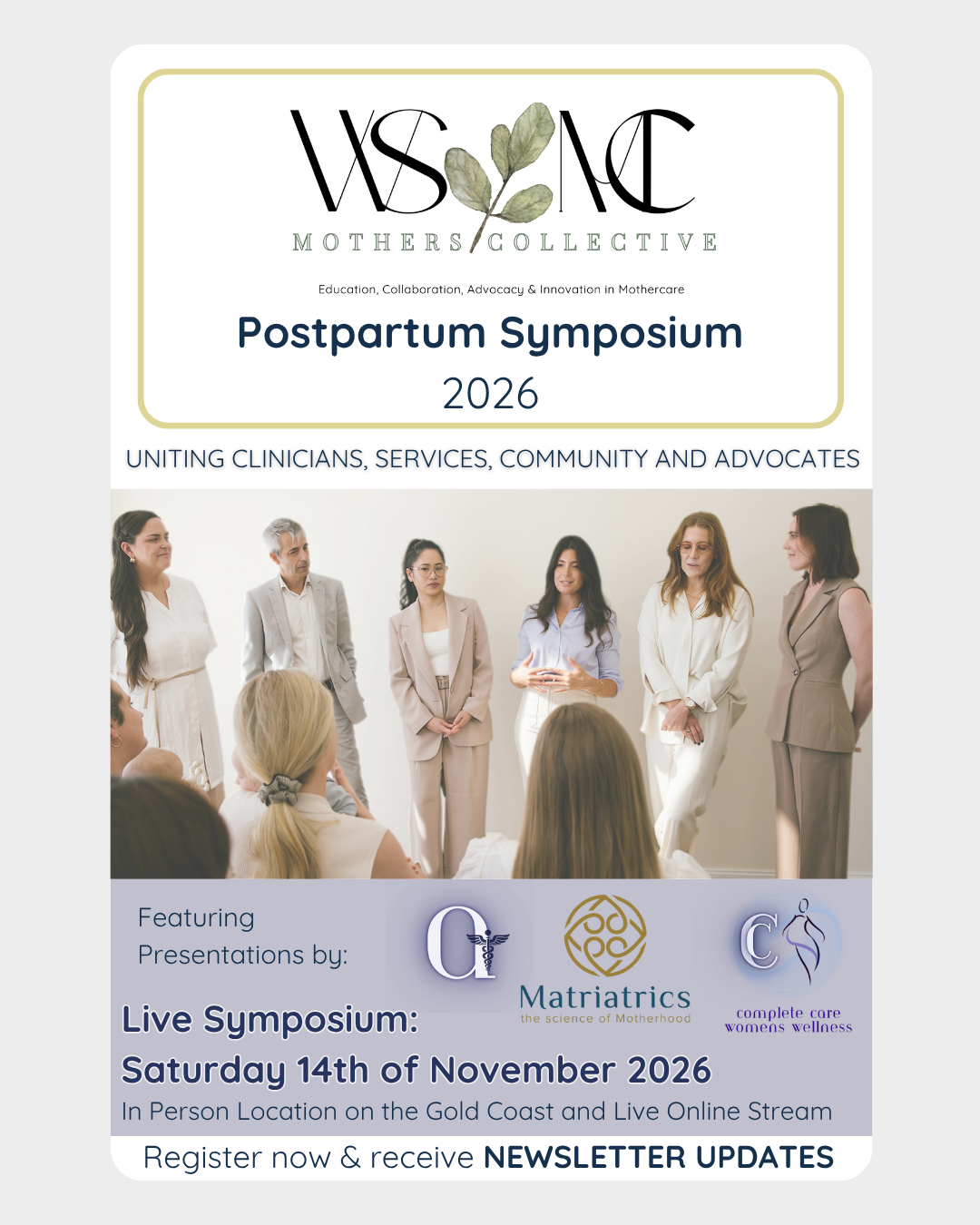
To further advance this critical dialogue, the Well Supported Mothers Collective (WSMC) and Complete Care Women’s Wellness (CCWW) will host a sector-wide symposium in November. This gathering will convene leading clinicians, allied health practitioners, researchers, and community advocates to collate broader multi-sector stakeholder commentary and synthesise actionable solutions for the Committee’s ongoing consideration.
Clinical experience continuously demonstrates a stark dichotomy in maternal outcomes. Unaddressed postpartum depletion and physiological trauma cascade insidiously into chronic physical morbidity, severe psychological distress, and long-term socio-economic vulnerability. Conversely, when mothers are provided with structured, foundational, and multidisciplinary approaches, we observe profound health restoration, allowing mothers and their families to thrive across the lifespan.
Achieving sustainable, long-term improvement in Australian maternal healthcare requires a steadfast commitment to three core structural pillars: dedicated resourcing and targeted financial funding, streamlined and equitable healthcare access across primary and allied health, and comprehensive cross-disciplinary education for all healthcare providers. We urge the Committee to prioritise these fundamental systemic reforms to protect the health and well-being of Australian mothers.
Collective Excellence
-
![]()
Chief Executive Officer
Chief Executive Officer
We count on this visionary to define strategic priorities, allocate resources responsibly, and ensure every decision reinforces long-term value creation. -
![]()
Head of Operations
Head of Operations
We trust this leader to synchronize production, logistics, and support functions, cultivating dependable processes that uphold our service commitments. -
![]()
Lead Engineer
Lead Engineer
We depend on this engineer to transform conceptual requirements into robust technical solutions that integrate seamlessly with existing infrastructures. -
![]()
Client Services Manager
Client Services Manager
We empower this manager to maintain proactive client dialogue, demonstrating our accountability while anticipating emerging needs with tailored solutions.